

SCDES Issues Harmful Algal Bloom Recreational Watch for Areas of Lake Hartwell
On May 27, SCDES Aquatic Science staff conducted a survey of Lake Hartwell including the Coneross Creek lake arm following multiple reports of an algal bloom. Field teams collected water samples and confirmed the presence of a cyanobacteria algal bloom with the potential to produce cyanotoxins. Cyanotoxin levels from the May 27 samples are currently low and below state recreational criteria.
The cyanobacterium in the May 27 samples is the same species identified during the 2025 HAB event on Lake Hartwell. Over the last few days, SCDES has received additional reports of the algal bloom. These areas include the Eighteenmile Creek lake arm and adjacent areas, Tugaloo River lake arm near Chickasaw Point and the cove south of Providence Church Rd. in Anderson. The current bloom has resembled spilled green and blue paint or appears streaky yellow similar to last year.
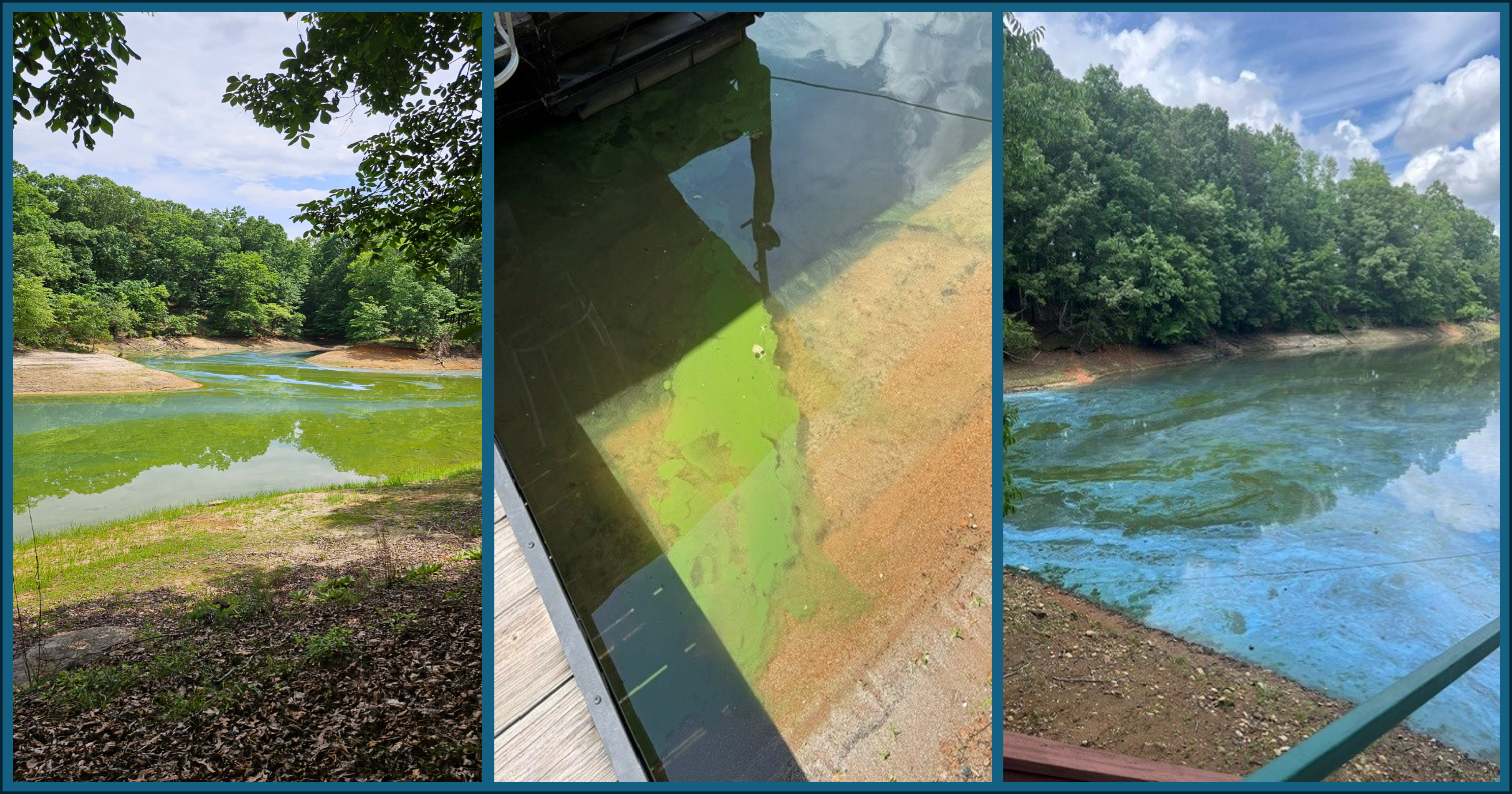
Photos show areas of Lake Hartwell where a cyanobacteria harmful algal bloom (HAB) has been observed in May 2026. The bloom has appeared as bright green and blue-green discoloration on the water's surface, resembling spilled paint or streaky patches. SCDES has issued a Recreational Watch for affected areas and continues to monitor conditions throughout the lake.
SCDES’s Algal Bloom Monitoring Map is actively updated with current Recreational Watch areas (yellow areas and yellow points on the map). These Recreational Watch areas are locations where the agency has confirmed the presence of the algal bloom based on field surveying or sample collection. To provide a more comprehensive view of the lake, the map also includes reported algal bloom sightings from residents, users or stakeholders of the lake (white squares on the map). Please note that algal blooms are dynamic and are likely to be present in other areas of the lake in addition to where Watches have been issued or observations have been reported.
- surveying the area before swimming or recreating
- avoiding direct contact with lake water in areas where the HAB is observed
- keeping pets and animals from swimming in or drinking from the lake in areas where the HAB is observed
HABs can cause health impacts to people or pets that come into contact with the algae. The most common symptoms associated with HABs are stomach pain, skin rash, headache, coughing and watery eyes. If a pet displays symptoms after coming into contact with a HAB, please consult with your veterinarian.
SCDES will continue to monitor the HAB on Lake Hartwell in order to provide the latest recommendations for protecting public health. The agency is in communication with local officials, stakeholders and the public as well as the U.S. Army Corps of Engineers.
As a reminder, HABs are a common occurrence in South Carolina lakes. They are typically observed during the warmer and drier months, and they can persist for several weeks. The blooms can look like bright green spilled paint or blue-green discoloration of the water. With cooler temperatures, heavy winds, and rain, these blooms may begin to break up and die off.
For more information or to report a possible algal bloom sighting, contact SCDES’s Bureau of Water HAB line at 803-898-8374 or email HAB@des.sc.gov. If calling after hours, please leave a message that can be returned. For additional information about harmful algae in South Carolina, visit the SCDES HAB webpage and Algal Bloom Monitoring Map.
Legal Disclaimer:
EIN Presswire provides this news content "as is" without warranty of any kind. We do not accept any responsibility or liability for the accuracy, content, images, videos, licenses, completeness, legality, or reliability of the information contained in this article. If you have any complaints or copyright issues related to this article, kindly contact the author above.
